Opera Cloud
Streamlining hotel operations for the modern workforce
Context
Opera Cloud is a hospitality property management system used by 40,000+ hotels worldwide, including Marriott, Hyatt, Wyndham, IHG, Accor, and many other major hotel brands. It handles check-in, billing, and guest services for properties ranging from budget to luxury.
I led redesign of check-in and billing workflows, managing 2 designers and partnering with hospitality executive leadership to create an AI-forward experience that enabled UI simplification, reduced interaction cost for common and unique workflows, and lowered the barrier to proficiency for new hotel employees.
Problem
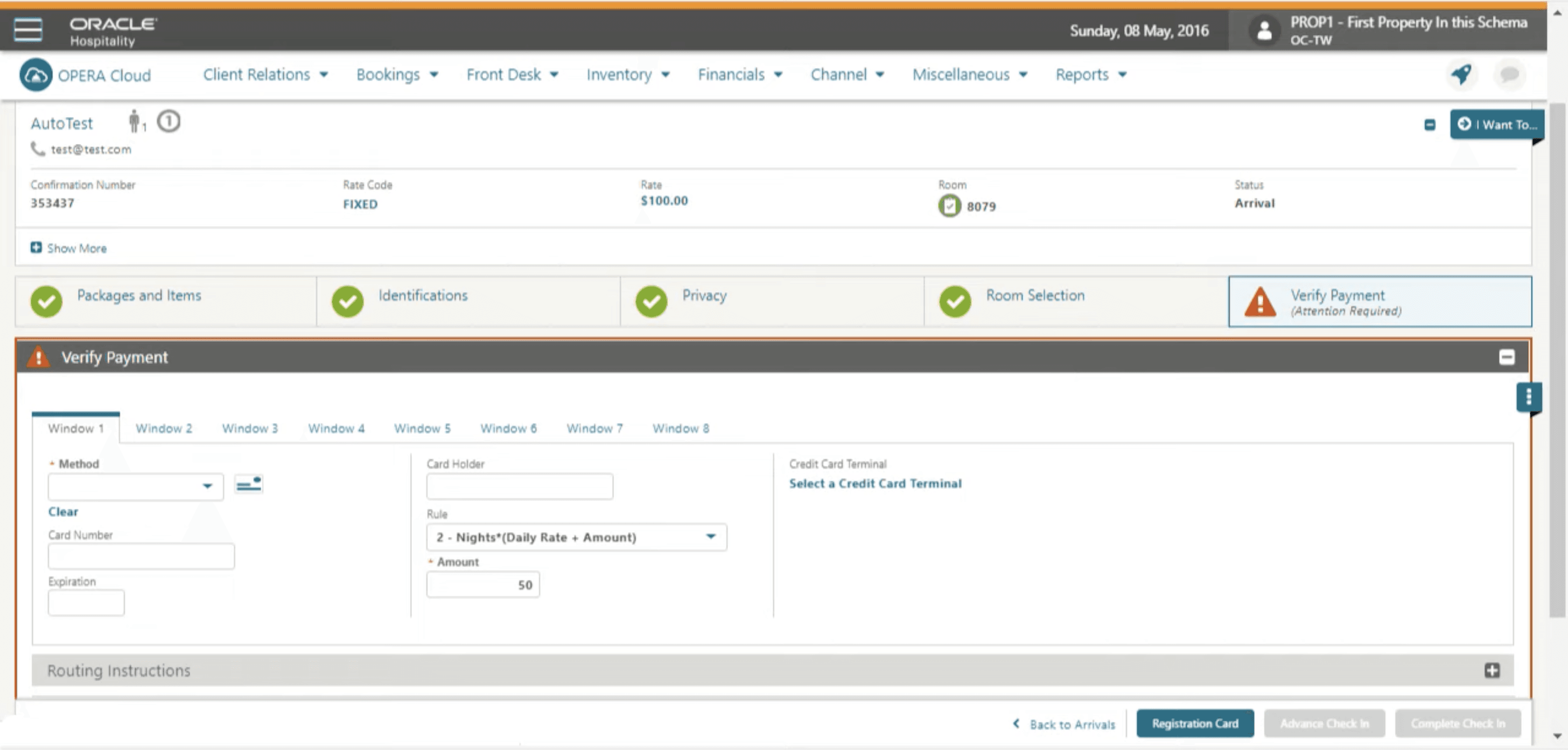
Support teams were overwhelmed by requests for help with check-in and billing workflows, driving unsustainable costs. These workflows forced staff to navigate multiple screens with many clicks and complex configurations, causing frequent billing errors and reducing the level of service front desk agents could provide to guests.
Research with 44 hotel staff across 11 properties revealed the scope: 70% of users struggled with billing workflows, agents made frequent errors or used custom workarounds, and check-in times exceeded hotel KPIs. High industry turnover meant extensive training wasn't an option.
Approach
Opera Cloud had become so flexible to accommodate every possible guest request that simple check-ins required navigating complexity designed for edge cases.
My strategy was to optimize the design for common scenarios with intelligent defaults and structured guidance, while creating off-ramps for exceptions. This served the goal of reducing clicks, eliminating user error in billing, and allowing hotel staff to serve guests comprehensively with minimal training. Most people conceptually understand how staying in a hotel and paying for one works even if they haven't worked in the industry, so we leaned into that mental model, using splitting a restaurant check as a model for billing exceptions.
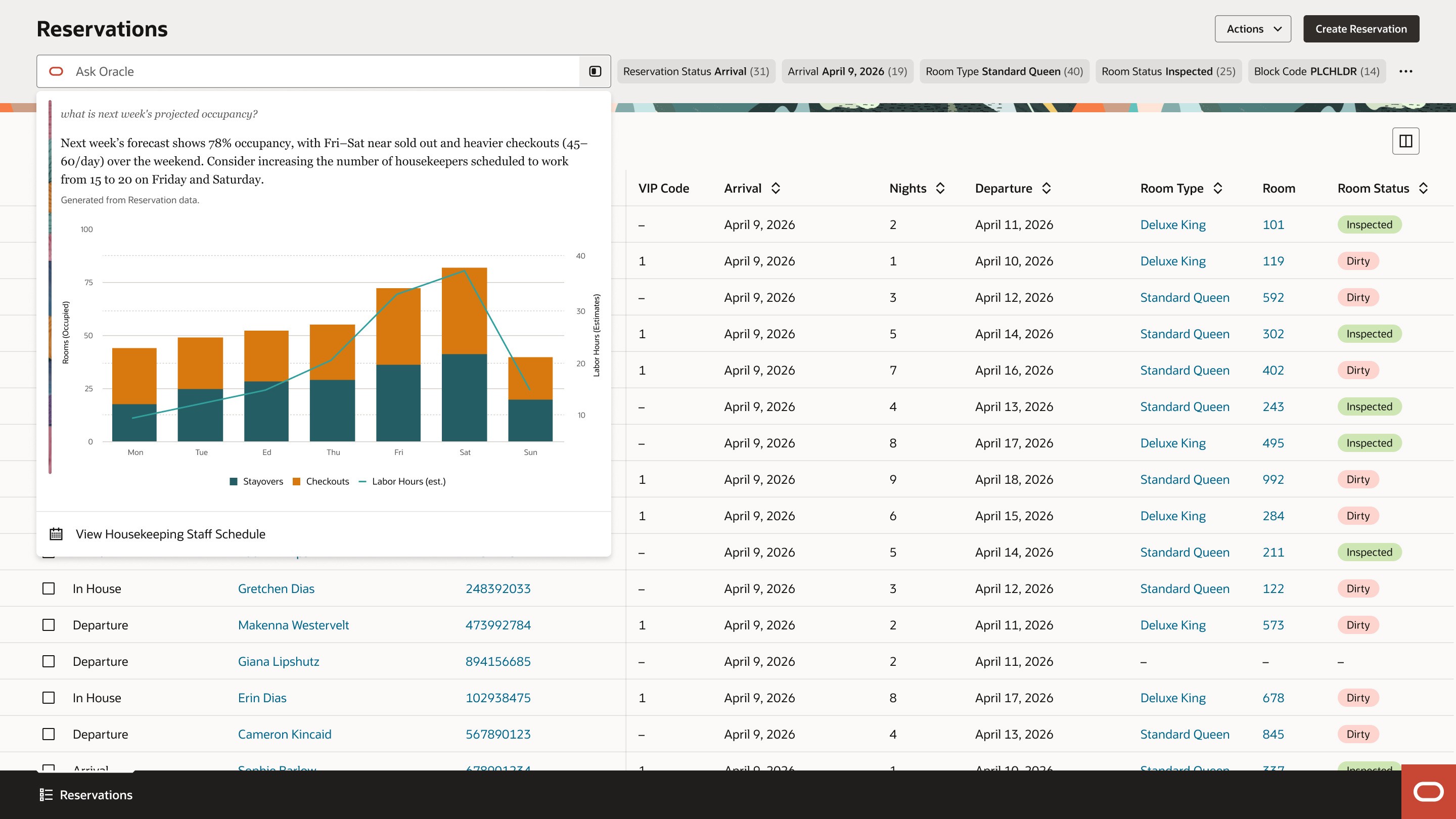
AI became central to this strategy. Hotel property management systems must support hundreds of possible tasks, from standard check-ins to rare exceptions like group billing splits or international tax calculations. The current product opted to expose every possible interaction on the screen at once. Ask Oracle, our AI assistant, offered an alternative path: radically simplify the core interface for common tasks, then use natural language as the gateway to everything else. Staff ask for what they need, and AI generates the appropriate interface or provides guidance.
This also reframed the training challenge. High turnover meant we couldn't rely on staff memorizing workflows for infrequent tasks. AI provides just-in-time assistance when needed, effectively replacing training with on-demand guidance.
To gain buy-in, I presented research findings and demonstrated reduced click counts of new workflows to executive leadership. When some suspected this was just a budget hotel training issue, we validated with luxury properties and discovered they experienced even more problems, some of which were masked by their own internal support teams.
Solution
Redesigned check-in workflow
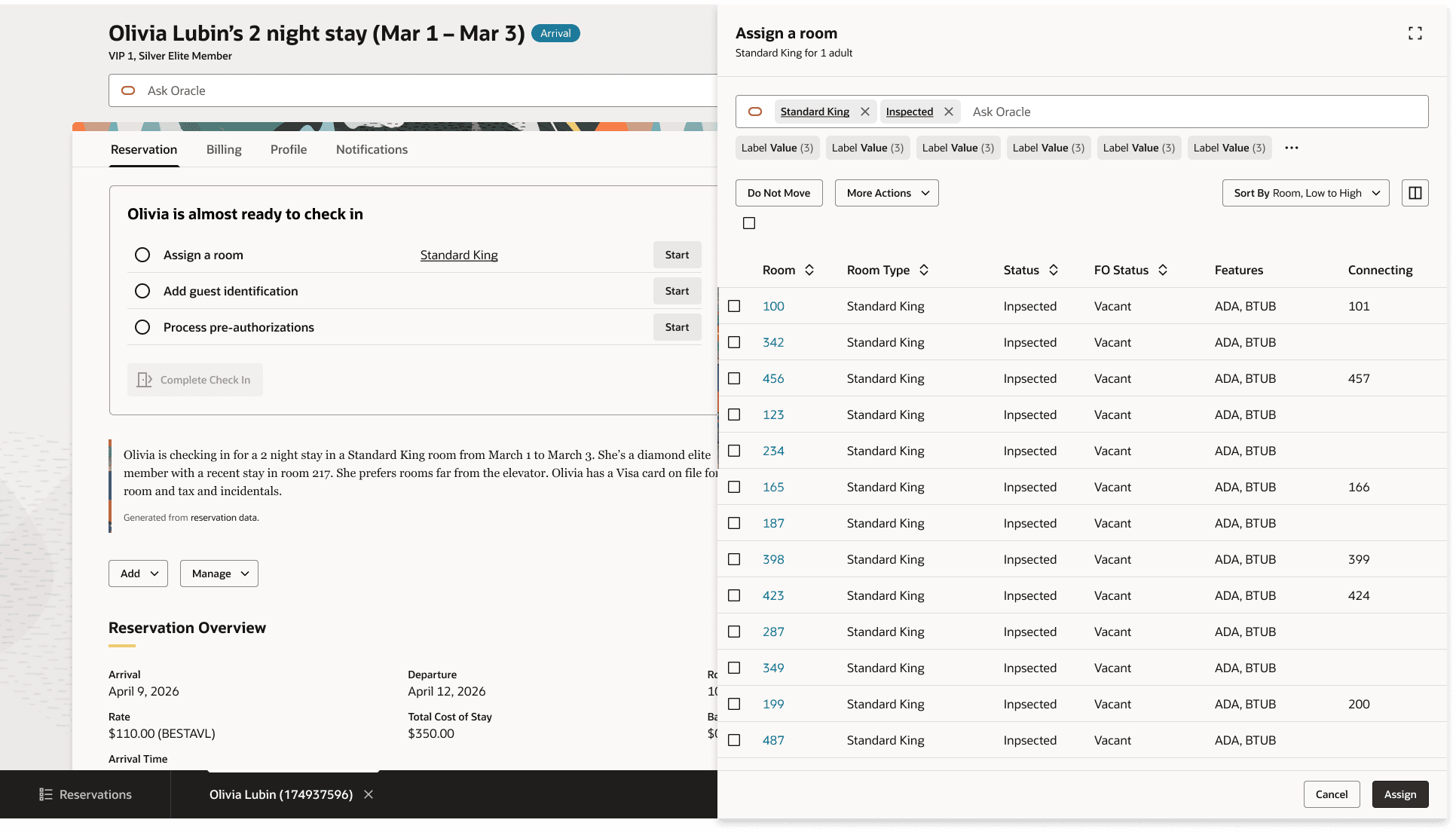
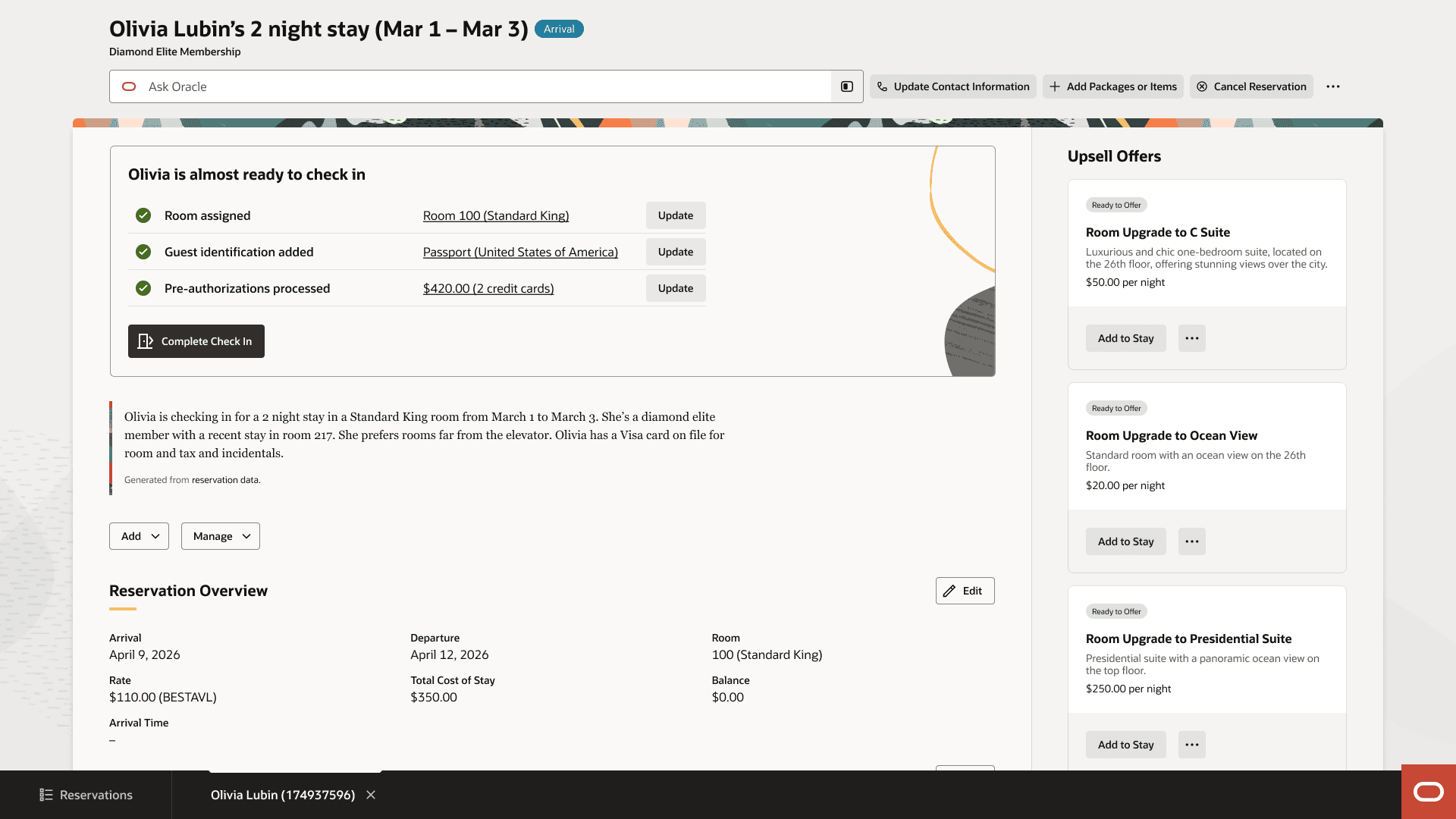
I replaced fragmented screens and manual payment configuration with a single guided widget. The old process required manually configuring payment slots and rules across multiple screens. User error here meant charges went to the wrong card, or guests were double-charged or not charged at all for things. Incorrectly setting up billing for a guest at check-in caused downstream billing issues across the entire stay, so simplifying this process was of utmost importance.
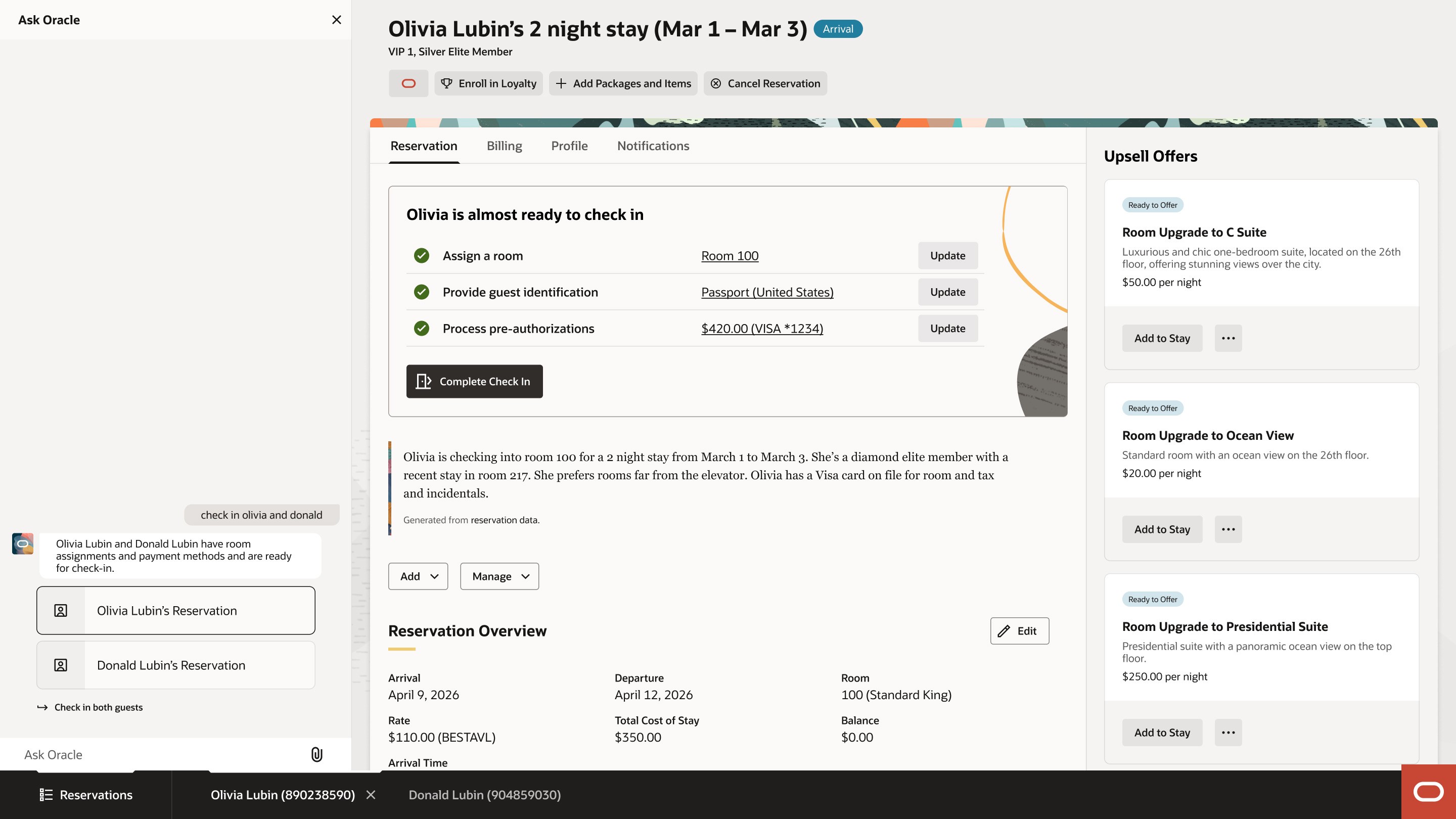
The new check-in widget provides step-by-step workflow with flexible ordering. Staff simply collect payment methods for room/tax and incidentals, and the system automatically routes charges correctly behind the scenes—no manual configuration required.
This reduced check-in clicks by over 50% and eliminated payment configuration errors.
Revised the mental model of processing payments
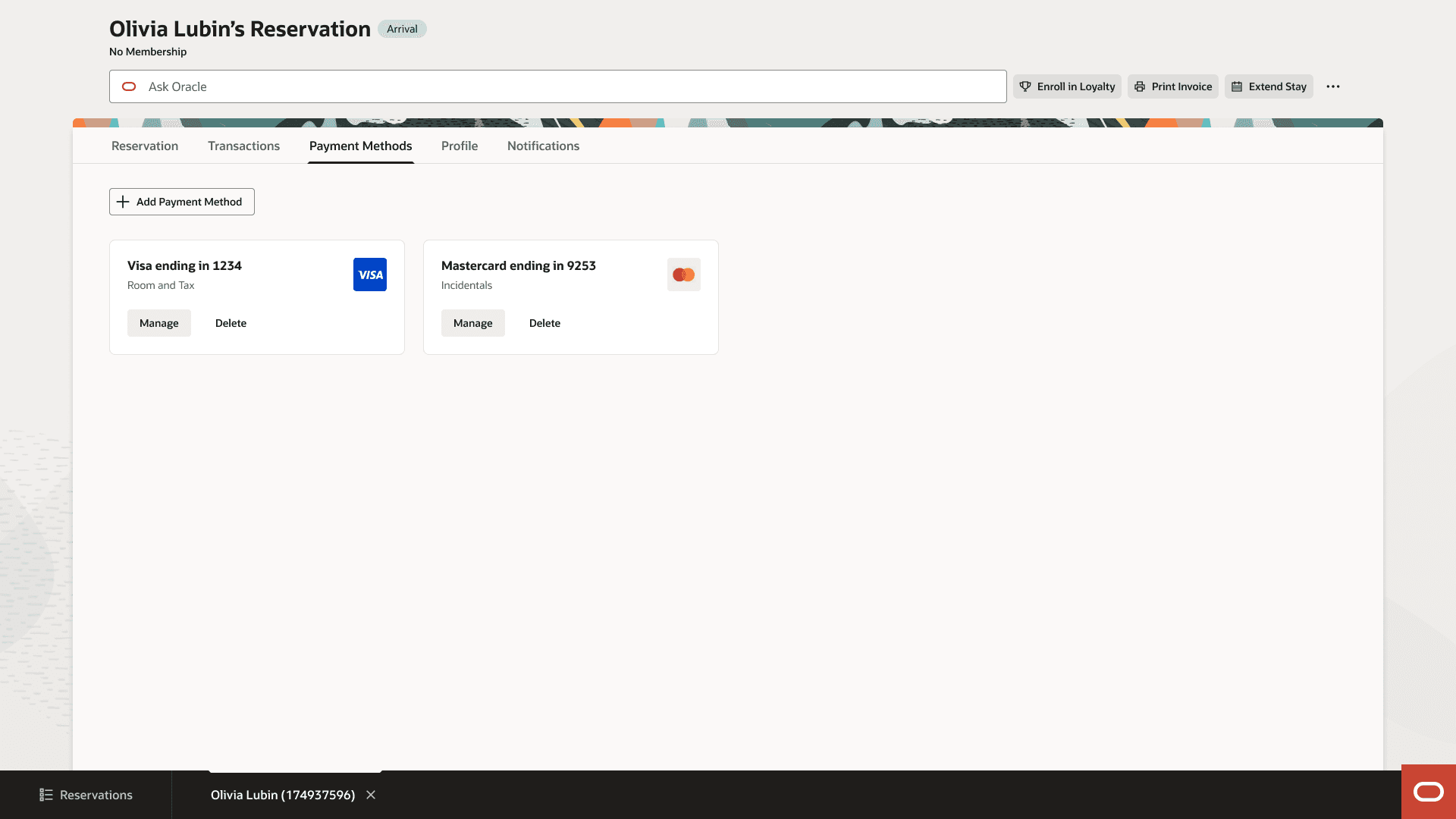
The old billing system required staff to manually configure 8-16 payment "Windows", which were abstract slots for different charge types and payment methods. Staff had to assign payment methods to the right windows and configure routing rules, leading to frequent errors. At properties with less training, misunderstandings of Windows configuration led to significant lost revenue and incorrect guest bills.
I redesigned billing around a simpler model: at check-in, staff collect payment methods for room/tax and incidentals (never more than 1-2 credit cards). The system automatically creates charge groups and routing rules behind the scenes. Staff only see actual payment methods the guest provided, eliminating the Windows concept entirely and relying on the same mental model of payment that most people are already familiar with from their own hotel stays.
At checkout, the guest's bill defaults to their check-in payment preferences, eliminating reconfiguration unless the guest requests changes. This allowed us to achieve a single-click check-in for most guests, something that previously took over 20 clicks and was a longstanding design request from customers.
AI assistance for uncommon tasks
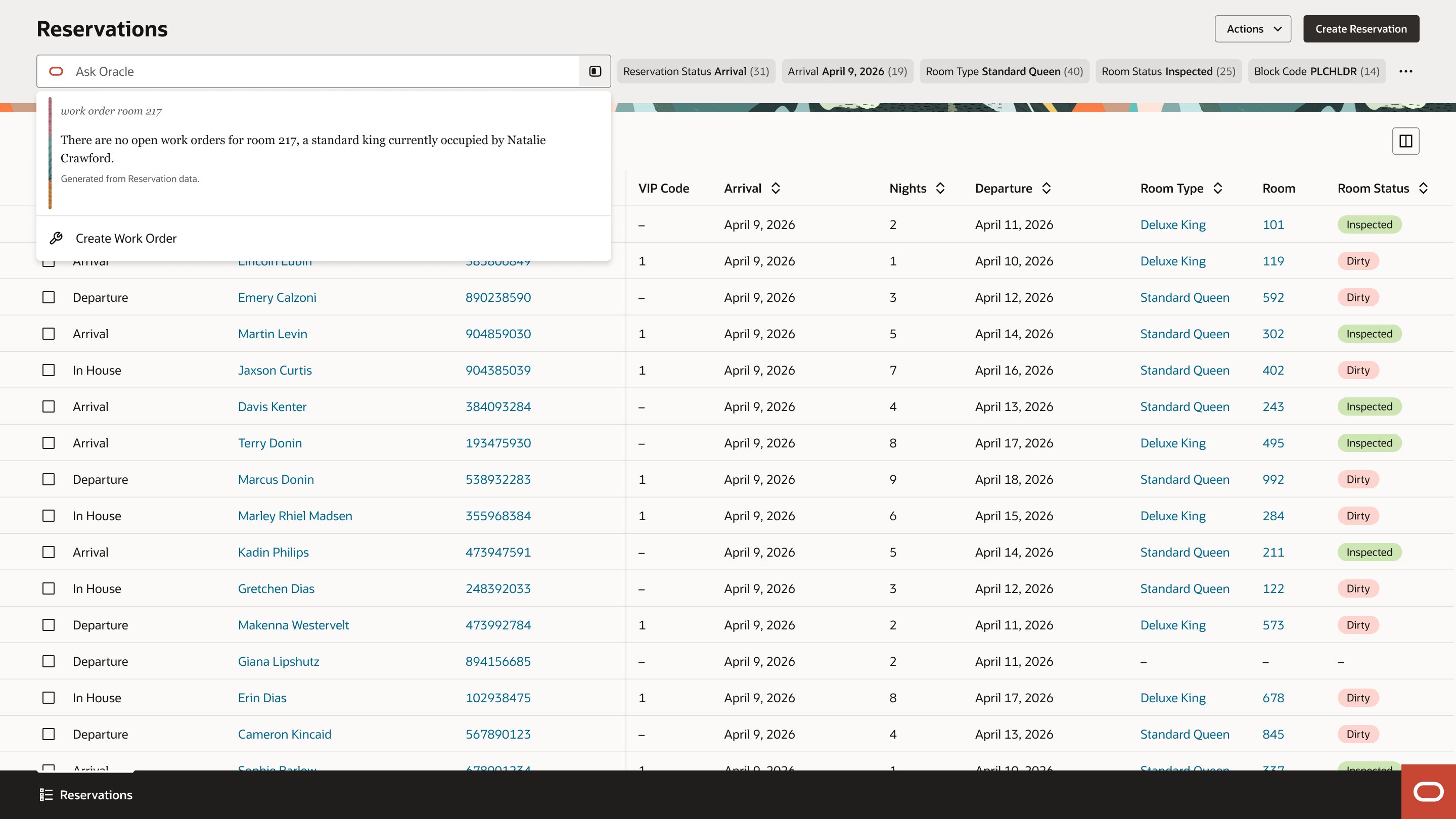
I introduced Ask Oracle, an AI-powered assistant accessible through natural language queries. Staff can ask questions (find reservation for John Smith), execute tasks (create work order for room 205), or get contextual help without navigating menus.
The system uses natural language understanding to interpret intent and either provides direct answers or generates appropriate UI for task completion. For example, asking to create a work order generates a pre-filled form with relevant guest and room context, staff only need to verify and submit.
This approach solved a core design tension: hotel staff need access to hundreds of possible tasks, but exposing all that functionality creates overwhelming interfaces. AI allowed me to greatly simplify the core UI while preserving access to any task through a single, consistent interface.
Impact
I validated the design through extensive customer partnerships. I presented to Oracle's Hospitality Customer Advisory Board and conducted design validation sessions with executive leadership and end users from Marriott, Hyatt, Wyndham, IHG, Omni Hotels, Accor, and other major hotel brands. Two rounds of user testing were also conducted with participants without hotel workforce experience, with 93% satisfaction and 83% confidence recorded across all tasks.
Internally, I aligned cross-functional teams through feedback sessions with sales, product management, consulting, and solutions engineering, ensuring the redesign would work across diverse customer needs and deployment scenarios.
The design improvements, introducing AI assistance for uncommon tasks, reducing core workflow clicks by over 50%, and eliminating manual payment configuration, directly address the problems driving support call volume: training requirements in high-turnover environments, workflow complexity, and billing errors.
In addition to the product-level impact, design patterns from this project are informing AI interaction guidelines across all Oracle industries.