Cross-Industry AI Patterns
Streamlining hotel operations for the modern workforce
Context
Oracle's executive leadership needed to understand how AI could transform workflows across their diverse product portfolio, spanning hospitality, food and beverage, telecommunications, digital government, and banking sectors.
As a designer on Oracle's centralized, multi-industry team, I was tasked with creating industry-specific AI interaction patterns to guide product strategy and inform engineering investments. I designed high-fidelity prototypes demonstrating AI capabilities across 5 industries, which were then built as code components by our central engineering team for company-wide deployment.
Problem
Oracle was investing heavily in AI capabilities, but product teams lacked clear interaction patterns for how AI should work in enterprise contexts. Teams across industries were building AI features independently without consistent patterns, leading to inconsistent experiences, duplicated design and engineering effort, and an unclear demonstration of AI value to management.
Executive leadership needed to see AI as a business differentiator to drive investment decisions, while product teams needed foundational patterns to build from. Without clear direction, teams were solving similar problems in different ways.
Approach
I established a foundational framework defining how AI should work in enterprise software. Rather than treating AI as a replacement for traditional UI, I defined four types of UI that would coexist:
Conventional UI
Static interfaces designed by humans for predictable workflows
Adaptive UI
Interfaces that adapt based on user behavior (pick up where you left off, surface new insights based on previous activity, etc.)
Conversational UI
Natural language chat interfaces for task execution and assistance
Generative UI
Interfaces produced by AI to respond to unique user needs
Working across Oracle's vertical industries, I leveraged domain knowledge of products and workflows to apply this framework to compelling use cases. I collaborated with product teams and leadership to focus on AI capabilities delivering significant cost savings for both Oracle and customers, as well as role-specific interactions tailored to how different users work.
For each industry, I designed high-fidelity prototypes in Figma demonstrating how these four UI types work together in real enterprise workflows. I then partnered with Oracle's central engineering team to build them as code components for company-wide deployment.
Solution
Hospitality
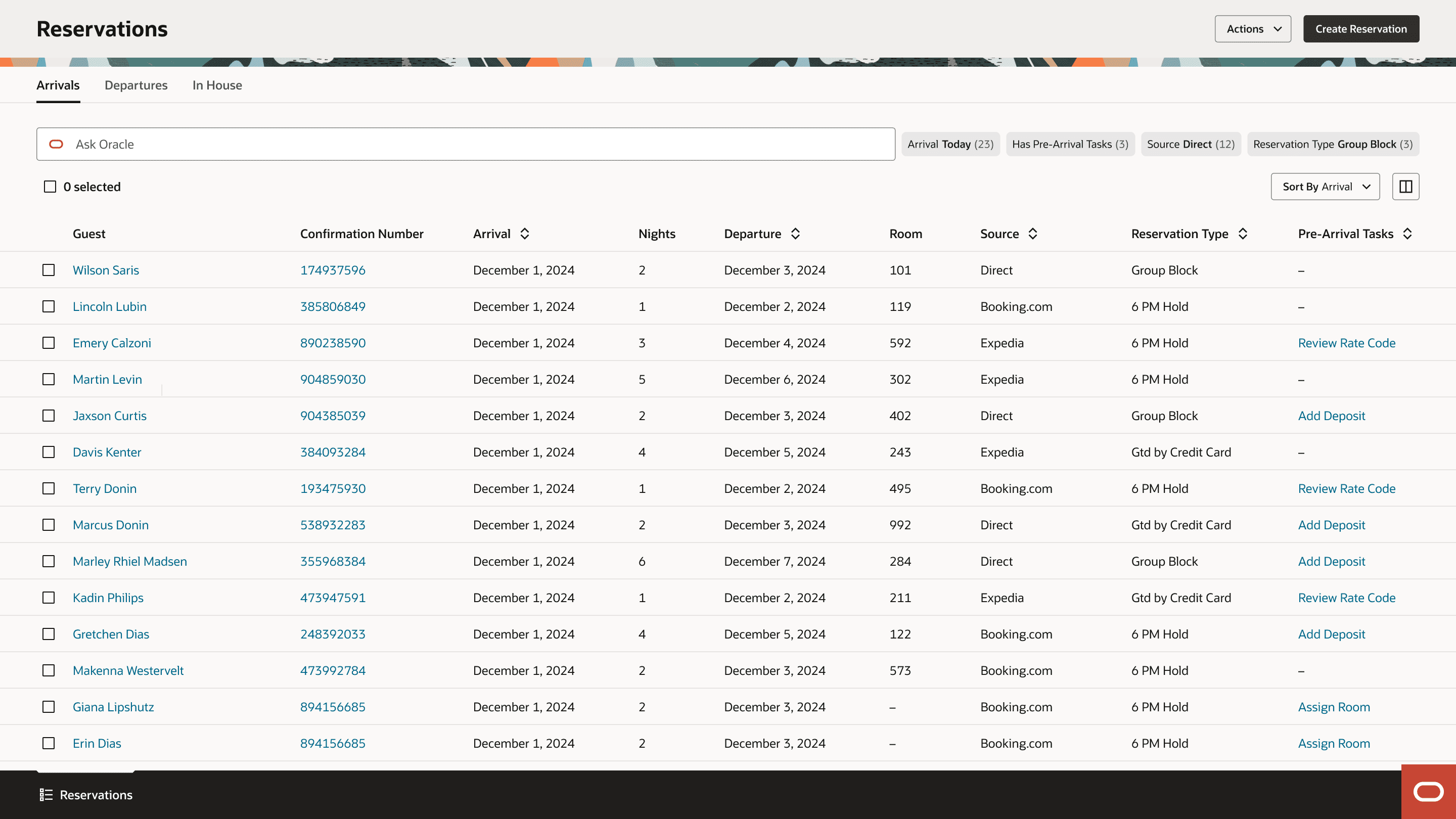
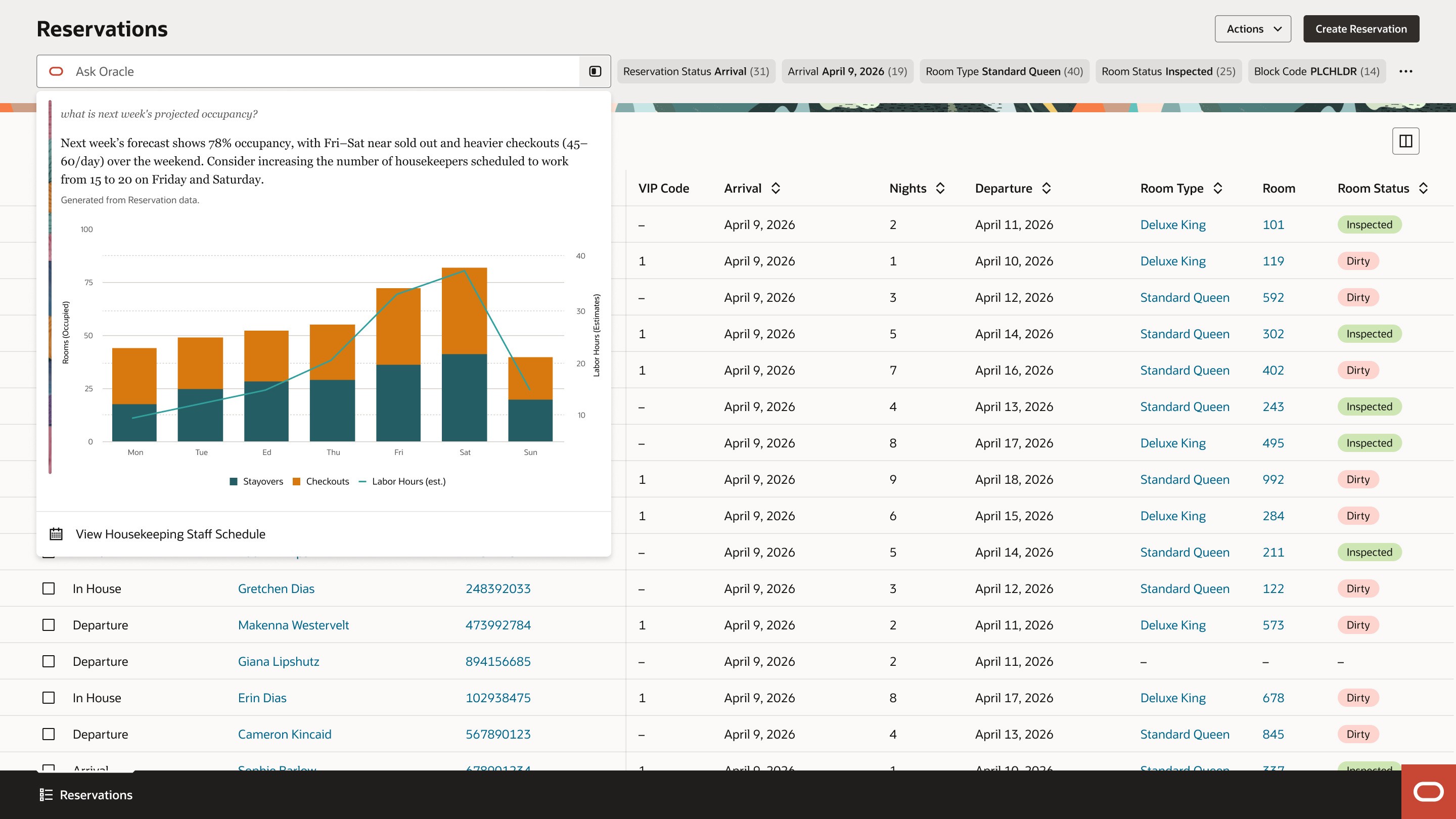
Hotel operations require handling both routine tasks and unique guest situations. This prototype demonstrates AI that adapts to different roles and tasks across the property.
The system answers natural language queries and connects users to appropriate UI, both conventional workflows for common tasks and generative interfaces for uncommon situations. It enables agentic check-in and check-out where AI handles multi-step processes with human-in-the-loop.
Role-based responses ensure relevant information for each user: when a housekeeping manager and revenue manager both ask about occupancy, the AI provides completely different insights, staffing insights status for housekeeping, revenue optimization opportunities for the revenue manager.
This eliminates the need for staff to navigate complex menus while ensuring everyone gets contextually relevant information for their role.
Food and Beverage
Restaurant implementation into Oracle Simphony currently requires months of consulting work to manually structure menus, options, timing, and pricing into the backend system.
This prototype demonstrates AI that analyzes a restaurant's menu from their website URL or a print file and automatically builds the complete structure (menus, menu items, modifiers, availability, and pricing) into Simphony's backend. What previously took consultants months now happens in minutes.
Natural language support provides guidance for menu editing after initial setup, allowing restaurant managers to make changes conversationally rather than navigating complex backend configurations.
This represents massive cost savings for Oracle (reduced consulting hours) and customers (faster implementations), while eliminating implementation delays that prevent restaurants from going live.
Telecommunications
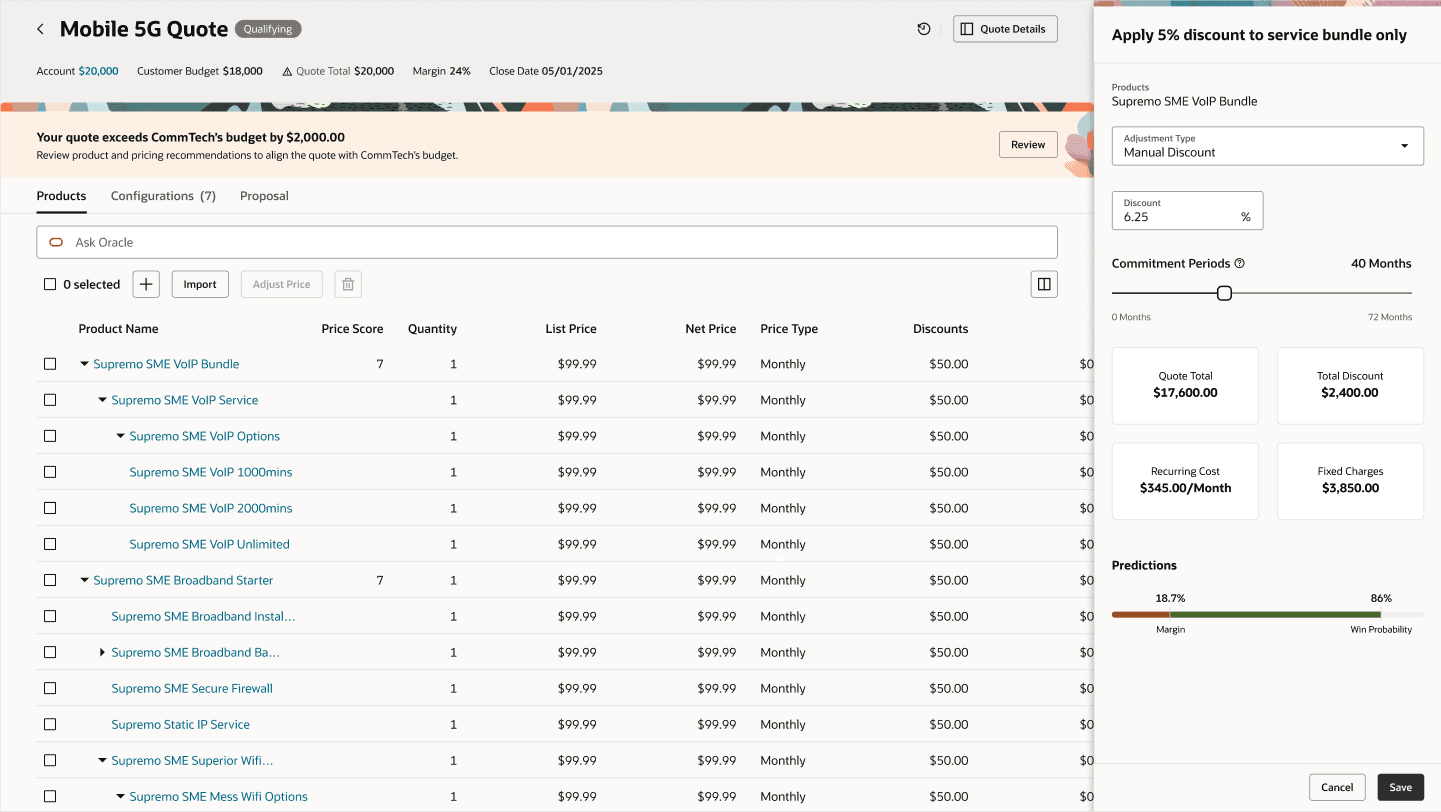
Sales representatives at companies like Verizon working on B2B deals face complex quoting decisions like balancing customer budgets, competitive positioning, and revenue optimization.
This sales quote optimizer understands the prospect's budget constraints and business needs, then makes intelligent recommendations to maximize both win probability and revenue potential. Generative UI allows reps to edit offerings conversationally rather than through static configuration screens.
The system optimizes across multiple dimensions: product mix, pricing strategies, contract terms, and service bundles. This transforms quoting into a data-driven process.
For telecommunications companies, this creates significant revenue opportunities by helping reps close more deals at higher values while reducing quote preparation time.
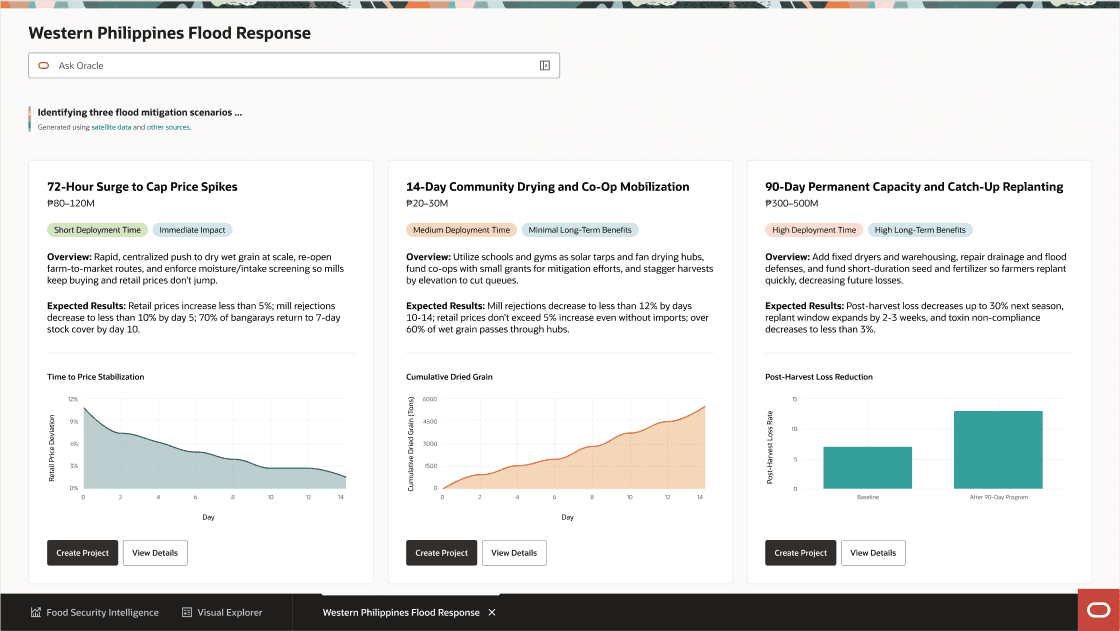
Digital Government
Food security in emerging nations faces threats from floods, droughts, and climate events. Government officials need tools to predict impacts and plan responses before crises occur.
This scenario planning tool uses Sentinel satellite imagery of farmland and weather event analysis to predict threats to food security. Officials can simulate different response strategies, adjusting for available budget, equipment, and human resources, to understand outcomes before committing resources.
Scenarios can be customized with real constraints, with the system modeling outcomes and trade-offs for each approach.
Approved scenarios convert into official government projects with implementation tracking, connecting strategic planning directly to execution. This enables data-driven decision-making for protecting agricultural systems and populations in resource-constrained environments.
Banking
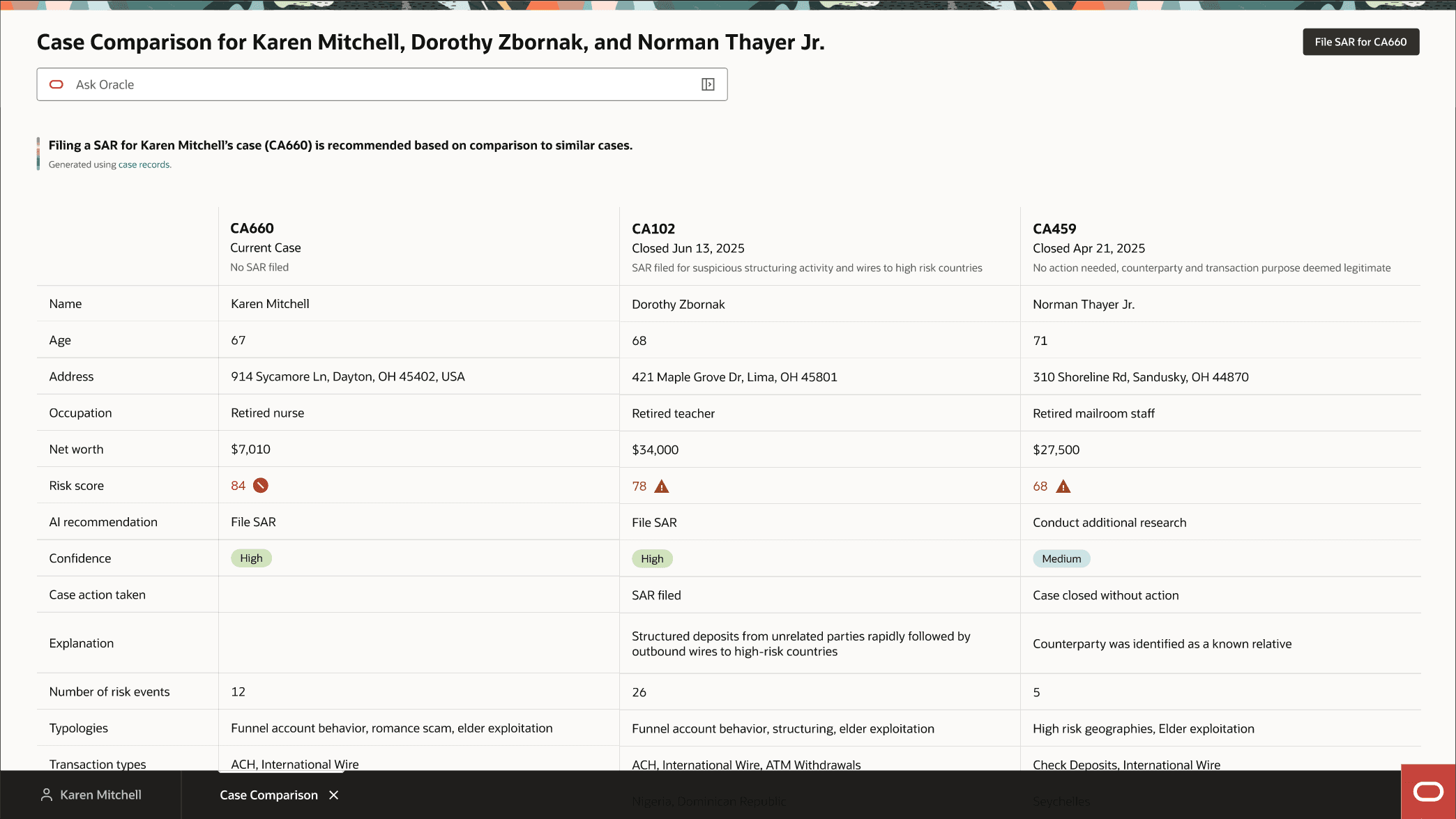
Money laundering detection requires analyzing complex patterns across customer behaviors, transactions, and relationships, work currently done manually by compliance teams.
This AI-assisted detection system flags high-risk banking customers based on behavioral patterns and transaction analysis. When potential fraud is identified, compliance officers can run detailed comparisons between customers with similar backgrounds and behaviors to investigate further.
The system surfaces relevant contextual information like transaction patterns, relationship networks, and unusual behaviors that would take analysts hours to compile manually. Generative UI creates custom comparison views based on what the analyst needs to investigate.
This accelerates fraud detection while reducing false positives. Compliance teams focus on genuine threats rather than sorting through alerts, improving both efficiency and regulatory compliance.
Impact
Working with Oracle's central engineering team, these designs were built as reusable code components deployed across all Oracle vertical industries. Flagship products in hospitality, telecommunications, and financial services are currently implementing these patterns.
I presented the prototypes to Oracle's executive leadership and design teams across industries. The work demonstrated AI as a business differentiator, informing investment decisions and AI strategy. Design teams starting AI initiatives now use this work as their foundation.
The four-type UI framework has been adopted company-wide as the guiding principle for AI implementation.